
Judo’s Black Belt Breakdown

At the end of June 2026, Judo Bank's shares fell around 40% following a surprise update that revealed a deterioration in credit quality and a downgrade to earnings guidance.
The reaction was severe, but perhaps more importantly, it raised a broader question. Was this simply an isolated event, or a sign that cracks in the Australian economy are beginning to appear?
Markets React to Surprises
When reality differs from expectations, markets react, sometimes severely. Investors already knew businesses were operating in a more challenging environment. Higher interest rates, slowing economic growth and tighter financial conditions have been part of the investment landscape for some time. What surprised the market was the speed at which Judo's loan book deteriorated, particularly after management had reaffirmed its outlook only a few months earlier.
A Broader Warning
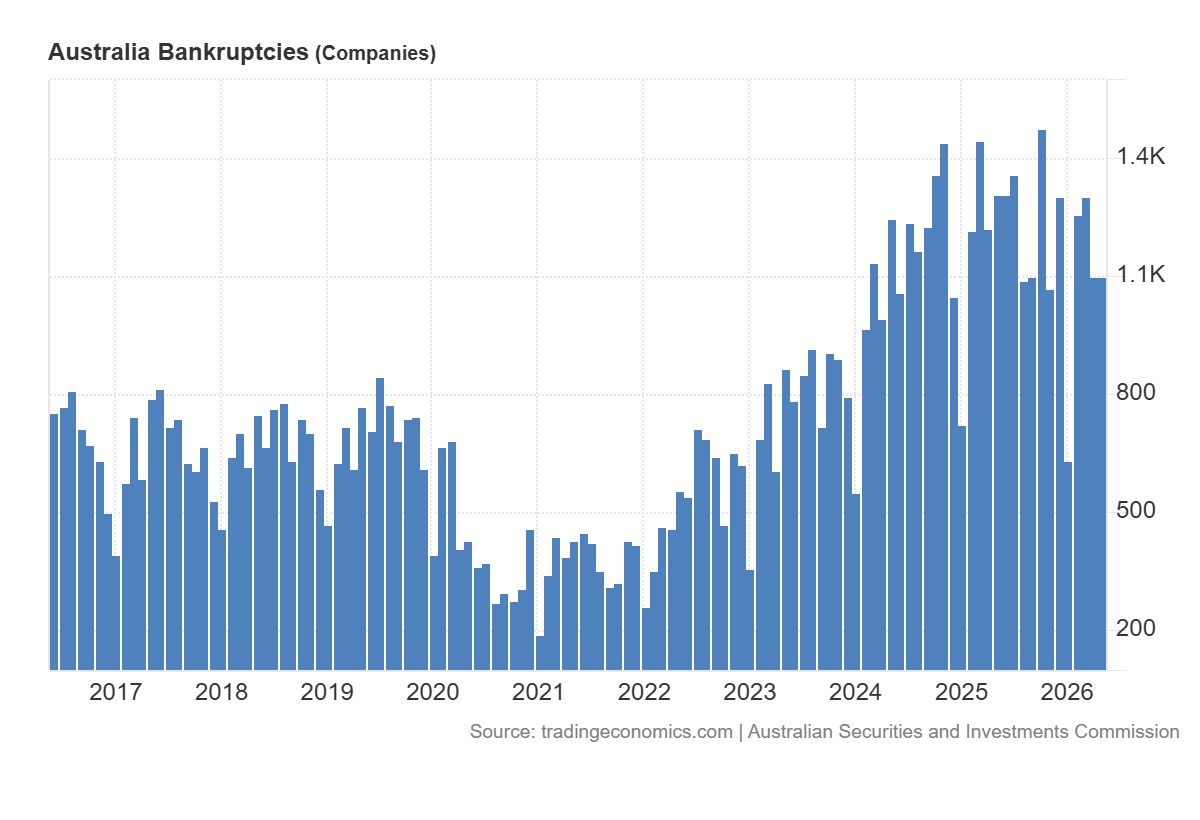
Judo's business model is focused on lending to small and medium sized enterprises, a part of the economy that often feels financial pressure before it becomes visible elsewhere. The chart below shows Australian company bankruptcies have been trending higher since pandemic support measures ended. Businesses are facing higher operating and borrowing costs coupled with weaker consumer demand, creating a more challenging operating environment. As interest rates remain elevated, these pressures are likely to continue.
The broader banking sector is also beginning to attract greater scrutiny. Short positions across Australia's major banks have risen in recent months as investors question whether earnings expectations fully reflect the impact of slower economic growth, lower credit growth and rising credit costs. While Judo's circumstances are unique, the market is increasingly asking whether similar pressures could emerge elsewhere.
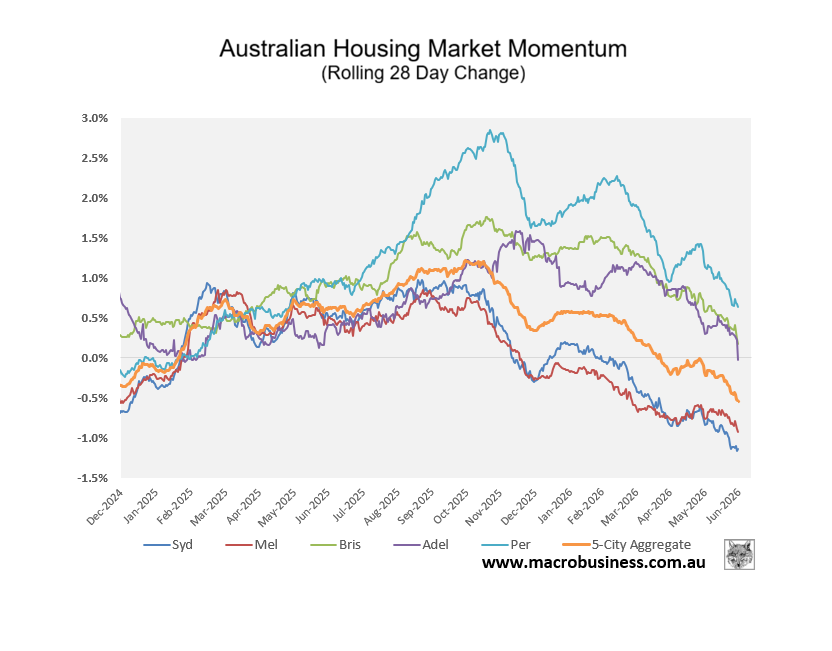
At the same time, Australia's housing market is beginning to show signs of broadening weakness. What initially appeared to be a correction centred on Sydney and Melbourne is now extending to more cities. The chart below shows how price momentum has slowed across all major cities, driven by the effects of higher interest rates, recent government intervention and reduced consumer confidence.
None of these indicators, viewed in isolation, point to an imminent recession. However, when business insolvencies, bank credit quality, short selling activity and housing markets all begin sending similar signals, investors should pay attention. Individually they are headlines. Collectively they become evidence that financial conditions are tightening across the economy.
For followers of the real estate and banking cycle, these warning signs should not be ignored, particularly given the current stage of the current cycle.
Oakleigh Investment Management Managed Account/Funds
Oakleigh Investment Management portfolios are constructed with a focus on owning high-quality businesses and building portfolios that can perform through the cycle.
Over recent quarters, all portfolios have seen a progressive reduction in exposure to banks and other cyclical sectors, while increasing our weighting to more defensive assets and maintaining a tactically higher allocation to cash in more recent months. With cash yields now at their most attractive level in many years, we're being compensated while retaining the flexibility to deploy capital when the opportunity arises.
Judo's black belt breakdown may ultimately prove to be just one bad day for one bank. Or it may be remembered as an early signal of a changing economic environment. Either way, our focus remains on ensuring our portfolios are well positioned to navigate an evolving investment landscape.

References:
https://www.marketindex.com.au
https://tradingeconomics.com/australia/bankruptcies
Australia's housing correction broadens to more capital cities - MacroBusiness
Important information
This note is issued by Oakleigh Investment Management Pty Ltd ABN 59 640 392 516, Authorised Representative 1285 526 of Oakleigh Financial Services Pty Ltd AFSL 501454.
The above information are general thoughts only. It is not intended to be nor should it be taken to be financial advice. Because of that, before you make any financial decision, you need to have regard to your personal circumstances and also consider seeking professional advice.
This note contains general information only and is not intended to provide any person with financial advice. It does not take into account any person’s investment objectives, financial situation or needs. You should consider your personal situation and seek professional advice before making any financial decisions.
The note reflects Oakleigh Investment Management’s views and beliefs at the time of preparation which are subject to change without notice. The information is provided in good faith. No representations or warranties are made by Oakleigh Investment Management as to its accuracy and reliability. To the extent permitted by law, no liability is accepted by Oakleigh Investment Management for any loss or damage as a result of any reliance on this information.
Please refer to full disclosures at www.oakleighfs.com/tcs.